DoorDash emerged as a valuable food delivery platform operating from Palo Alto, now valued above $12 billion and competing successfully against established services like Uber Eats and Postmates.
Origin Story
The founders initially pursued a different business concept. During a conversation with a frustrated shop manager, they discovered her primary challenge: managing delivery orders without adequate driver resources. Recognising the genuine market need, the team pivoted entirely.
The Concierge MVP Approach
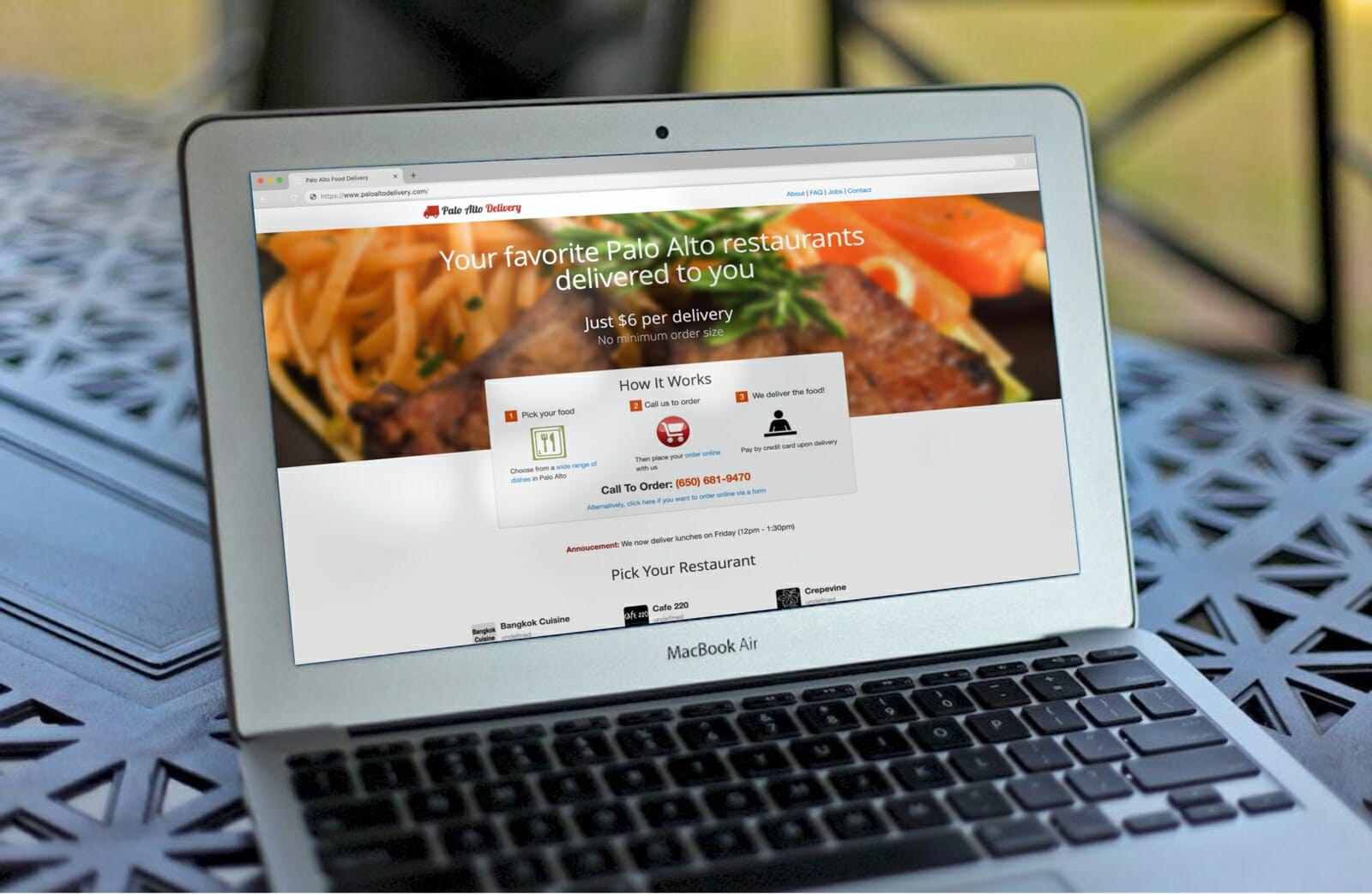
Rather than engineering a sophisticated platform, the Stanford students built a basic website featuring restaurant listings sourced from public directories. Their operational model relied on:
- A telephone number connecting to a founder's personal mobile device
- Manual order fulfilment by the founders themselves
- No backend technology or dispatch infrastructure
- No driver recruitment; founders personally made deliveries between classes
The website launched as "PaloAltoDelivery.com" with minimal automation.
Initial Traction
Their first customer discovered the service through Google search, ordering Thai food via phone call. All four founders completed the delivery together. Gradually, campus word-of-mouth generated multiple daily orders.
"We were the delivery drivers… We used Square to charge customers. We used a Google Doc tracking orders. We used Apple's Find My Friends monitoring driver locations." — Stanley Tang
Evolution and Scale
After validating the business model, the team rebranded as DoorDash and transitioned manual processes into automated systems. The company has since secured $1.4 billion across eight funding rounds.
"Start small and test quickly. Most startup decisions prove reversible, so prioritise execution speed and learning." — Tony Xu, CEO
Key Takeaway
Modern tools like Zapier, Google Sheets, and chatbots enable demonstrating software experiences without extensive development timelines. The critical difference: whether humans or code fulfil operations matters less than delivering customer value.